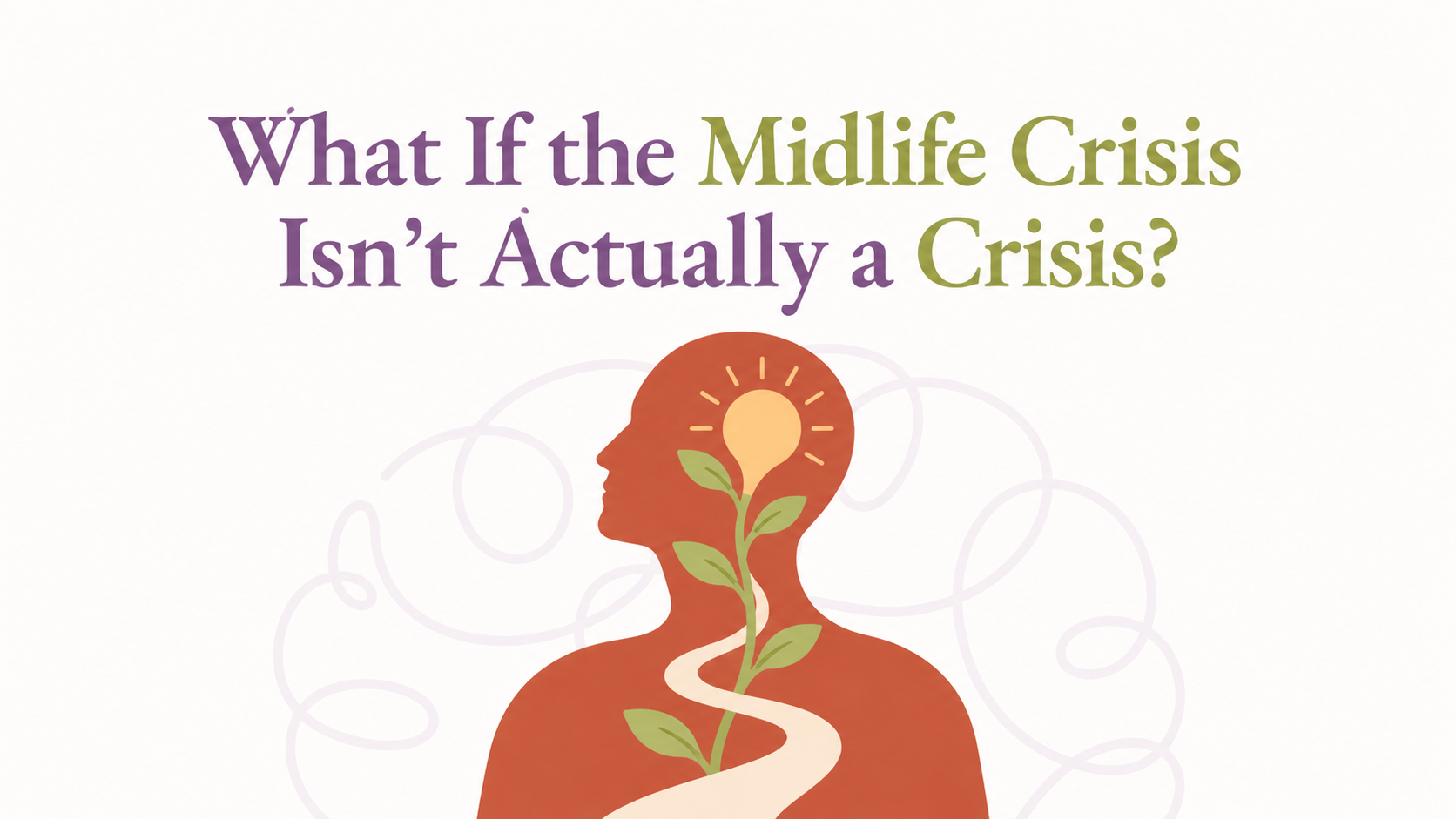
We’ve normalized the idea of the midlife crisis.
Someone reaches their 40s or 50s and suddenly starts questioning their career, relationships, identity, priorities, or the life they have spent years building.
Culturally, we almost expect it.
We joke about the sports car. The dramatic haircut. The impulsive decision to quit a job, move somewhere new, or reinvent an entire life.
But perhaps we should question the label itself.
What if some of what we call a midlife crisis is actually a woman’s mind and body asking to be heard?
October is Menopause Awareness Month, and as conversations around perimenopause and menopause become more visible, many women are finally finding language for experiences previous generations often navigated quietly.
Hormonal changes can influence sleep, mood, energy, concentration, stress tolerance, and emotional regulation.
But at Flourish Holistic Wellness, we believe hormones are only one part of the story.
Because menopause does not happen in a vacuum.
By midlife, many women have spent decades carrying responsibility.
Raising children. Building careers. Navigating marriages and relationships. Caring for aging parents. Managing households. Experiencing grief. Meeting expectations. Being dependable.
And the nervous system has been present for all of it.
Patterns of chronic stress, anxiety, over-functioning, people-pleasing, emotional suppression, disrupted sleep, lack of nutrition-dense meals or consistently placing our own needs last do not simply disappear because we reach a certain birthday.
Then the body begins changing.
Sleep may become less predictable. Emotions may feel closer to the surface. Our capacity for stress may feel different. Things that were uncomfortable but tolerated may suddenly become harder to tolerate.
And sometimes we call that a crisis.
But What If It’s Information?
Therapy gives us an opportunity to become curious instead of immediately deciding that something has gone wrong.
What has changed in this significant relationship that feels different?
Is there a way to stop feeling exhausted from being the person everyone depends on?
How do I deal with resurfacing emotions from the past?
When was the last time I was comfortable with the pace of my daily life?
I feel so differently about myself today then I used to; how to get the old ‘me’ back?
These questions do not necessarily mean something is broken.
They may mean something deserves our attention.
A whole-person approach recognizes that hormonal health, emotional health, relationships, past experiences, stress, sleep, physical wellbeing, and the nervous system are interconnected.
Hormonal treatment may be an important part of care for some women and should be explored with an appropriate medical provider. Therapy can provide another part of that care: space to understand the woman experiencing the transition, rather than focusing only on the symptoms.
Mindfulness in Midlife: What Are You Noticing?
Mindfulness does not require us to immediately fix anything.
It begins with noticing.
For women moving through perimenopause, menopause, or simply a season of significant transition, it can be helpful to become curious about patterns that may be emerging.
Notice your capacity.
Are situations that once felt manageable suddenly leaving you depleted?
Rather than judging yourself for having “less patience,” consider whether your body is communicating that your current level of demand is no longer sustainable.
Notice your emotional patterns.
Are you becoming more irritable, tearful, anxious, disconnected, or reactive?
Before judging and labeling an emotion as inappropriate or too big, pause and ask:
What happened right before I felt this way?
Emotions often carry information about needs, boundaries, expectations, and experiences that deserve attention.
Notice what your body is asking for.
How are you sleeping?
When do you feel most energized?
When do you feel tense?
Do you notice yourself holding your breath, clenching your jaw, tightening your shoulders, or feeling constantly “on”?
Sometimes awareness of the body gives us information before our thoughts catch up.
Notice your relationships.
Midlife can bring increased clarity around relationships.
You may notice where you feel supported and where you consistently feel depleted.
You may also recognize patterns of over-giving, avoiding conflict, rescuing others, or minimizing your own needs.
That awareness is not necessarily a signal to make an immediate life-changing decision.
It may simply be an invitation to explore.
Notice the story you are telling yourself.
Thoughts such as:
I should be handling this better.
I shouldn’t feel this way.
I have a good life, so why am I unhappy?
Something must be wrong with me.
Mindfulness allows us to notice those thoughts without automatically accepting them as truth.
A more compassionate question might be:
I am experiencing something really hard right now; what might I need?
Maybe Midlife Is Asking a Different Question
The phrase “midlife crisis” suggests something has malfunctioned.
But there may be another way to understand this season.
Midlife can involve grief.
It can involve changing roles, changing bodies, aging parents, children becoming more independent, shifting relationships, or the realization that time feels different than it once did.
But there can also be clarity.
Boundaries may change.
Priorities may shift.
Old patterns may stop working.
A woman who has spent decades caring for everyone else may finally begin noticing herself.
Instead of asking,
“What is wrong with me?”
perhaps this season invites another question:
“What is changing—and what do I need now?”
You do not have to have the answer immediately.
Sometimes the first step is simply paying attention.
Perhaps that is not always a crisis.
Perhaps sometimes, it is an invitation to listen.
Your hormones matter. Your mental health matters. And so does the story that brought you here.